
Mobile app: from idea to reality!

Do you have an idea for a mobile app and want to make it happen?
- What are the steps?
- Who are the right partners?
- How much money will you need?
- How will you make it a success?
These are the usual (and fair) questions for anyone who wants to turn an idea for a mobile app into reality but does not know the steps and what they involve.
You will find the answers below:
'Will my idea catch on?'
In our view, nothing in software comes out of nowhere. The field is so popular and so global that it is almost impossible to come up with the one idea nobody else on the planet has built.
Even if you have never heard of it or could not find it online, there is a very good chance that a similar app already exists (you will most likely find it in China...). Of course, that should not discourage you from getting started.
The success of a mobile app depends less on the idea and mostly on its execution.
So there are no good or bad ideas. There is good and bad execution (implementation). What you need to do is plan your steps as well as you possibly can, while choosing the right partners.
'How do I protect my idea?'
It is reasonable and unavoidable that you will disclose your idea to some people - professionals outside your circle of friends. For example a lawyer, a graphic designer or the software company that will build the mobile app. Ideally, you should sign a non-disclosure agreement (NDA) with the professional or professionals you share the information with, to protect yourself against any leak of that information.
Registering intellectual property rights (copyright)
This is where things get a little complicated: you can certainly go to a lawyer to register the intellectual property rights to the idea and the app. That does not mean, however, that you will be fully protected. Generally speaking, someone else could build the same idea with a slightly different concept without infringing your rights. Let us not forget, either, that registration costs money...
On the plus side, registration could potentially deter some would-be competitors. So approach the decision to register with great care, and on the advice of a lawyer experienced in these matters.
'Do I need to have a company?'
Only if you intend to earn revenue from the app; in that case, yes. You need a legal form (sole proprietorship, private company (IKE), general partnership, etc.) so that you can issue the corresponding document (receipt/invoice) to your customers. To set up a company, you will need to contact your accountant.
GDPR
The European GDPR regulation concerns the protection of the personal information of users that is stored and shared within the app (e.g. the user's full name, e-mail, phone number, etc.). Compliance with this regulation is necessary and mandatory. The lawyer is the one who drafts the Privacy and Personal Data Protection Policy.
Source code
To finish with the legal matters, you should know that the app's source code belongs to its creator. In other words, the intellectual property rights to the code belong to the company that develops it. But not the commercial rights! This means the creator will hold the copyright to the source code, but may not under any circumstances exploit part of the app (or the whole app) for its own benefit.
The contract you sign with the company or professional who will build your mobile app should, among other things, cover the case of you buying the source code.
Logo
 Moving on to the practical steps for your app, you will need a mark, known as a logo. The logo is the app's trademark. It can be the same as the logo of your business itself (e.g. Coca-Cola uses the same logo on its website, its app, its offices, its advertisements, etc.).
Alternatively, the mobile app's logo can be unique and have nothing to do with any other logo you already use.
For a professional logo you should go to a professional graphic designer. There are also online tools that let you make the logo yourself, but the result may not be ideal. Mind the intellectual property rights here too! Unlike the rights to an idea, the rights to use a logo can be registered. You can do this through a lawyer or yourself here (login via TaxisNet).
Domain - Website
We consider registering the relevant domain essential, even though in theory you do not need a domain to launch the app. If, for example, your app sells office supplies and you have named it e-grafeio, you should register the domain www.e-grafeio.gr (besides the .gr ending, it is worth registering the .com and .eu ones too). The costs are small in any case, around 20€/year per domain.
The website is optional. We usually build the website after the app has been created. Its purpose, through a simple page (landing page), is to explain the app in a few words, images or video and to send the user to the Play Store and the App Store to download it to their phone.
Business Plan
The business plan is your map. Whichever partner or investor you share your idea with, you should be able to describe your business plan in a detailed and clear way. You can turn to a professional to create the business plan, but you can certainly put a large part of it together yourself.
To begin with, you should be able to answer the following questions in detail:
- What problem am I trying to solve with the app?
- How do I solve the problem?
- Do I do it better than the existing competitors (competitive advantage)?
- How much money do I need to deliver the project?
- How will I earn revenue through the app?
- How much will I charge my customers?
- What will my turnover be in the first year (approximate range)?
- How many customers do I need to cover my expenses and recoup my initial capital?
Marketing Plan
 The marketing plan should describe in detail how you intend to acquire users and customers.
Some basic questions to ask:
- Who is my target audience (e.g. women aged 20 to 40)?
- Which media does my target audience mostly 'hang out' on?
- Which social media will I advertise on, and how?
- Would it be useful to advertise offline too (newspapers, magazines, radio, television)?
- How much will advertising cost me each month?
Graphic design
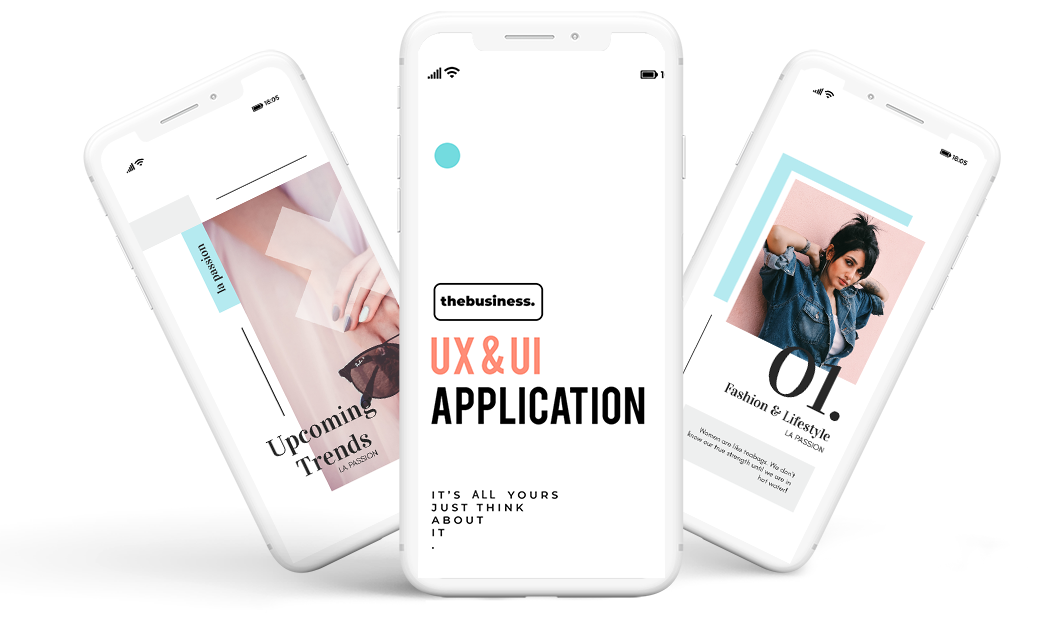
Besides the logo mentioned above, the professional graphic designer is the one who will design all the views, that is, all the screens of the app, before development begins. This way you will know in advance how the app will look and can give your comments/corrections.
The graphic designer is usually provided by the software company you work with, since the two will work hand in hand. You can, however, look for a designer yourself. But be careful! They should specialise in mobile design, that is, be experienced in mobile apps.
Mobile app development
 Perhaps the most important part of the first phase of the project is the partner you choose to deliver the technical side of the mobile app. The points to focus on to help you choose the right partner are their experience, their completed projects, their clients, and the communication - chemistry between you. Price alone cannot be a selection criterion unless all the criteria above have been checked together.
The partner should not only be able to meet the demands of the project but also be available to keep evolving the app's code and technologies after development is complete.
The truth is this: the partner you choose will always be your unofficial 'business partner'. You will go through every phase of your venture together, and a large part of its success will come down to how well you work together. Although nobody is irreplaceable, it is always difficult (in some cases even financially unviable) to hand the management of the app to a new partner if you stop working with its original creator. Your choice of this partner should therefore be as sound as it possibly can be.
Admin panel
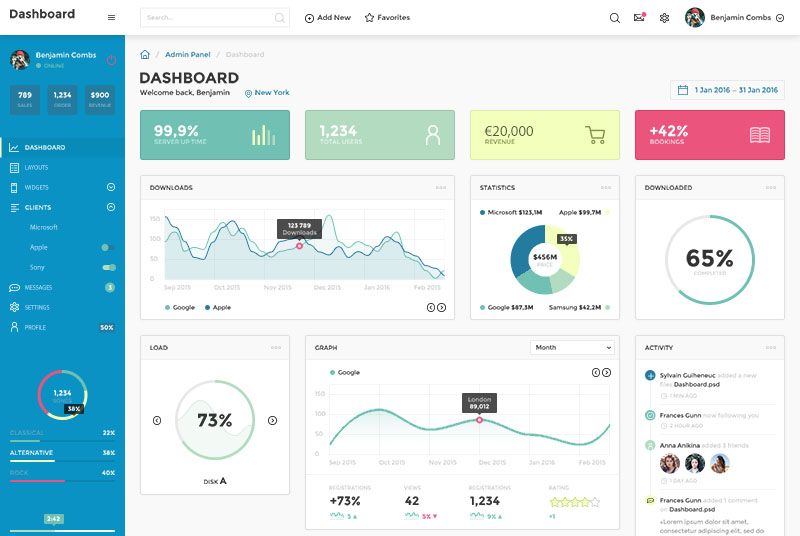 An integral part of a mobile app is the administration environment (admin panel or dashboard). In reality it is a second system, separate from yet tightly linked to the mobile app. Through the admin panel the administrator (you) can manage the mobile app and carry out a wide range of actions. For example, the administrator can edit the app's content (texts, images, videos) and its users, view statistics, change prices and much more, depending on the case.
Server
The server is the machine on which all the app's data is stored (code files, photos, database, etc.). One of its many responsibilities is to serve the app's data to users. The server used should therefore have high quality and technical specifications, be fast and have enough capacity to 'carry' the project's workload. The right server package is chosen on the recommendation of the partner who will build the app.
Tests
Once all the functionality is complete, the app has to go through significant checks and usage tests. The aim is to fix all the problems (bugs) that had not been noticed until then. Another important part of testing is the so-called penetration and stress tests. These check the ability of the server and the app to cope with very high traffic as well as with 'attacks' from malicious activity.
Publishing to the stores
Once all the problems have been fixed and the tests above have been passed, the development partner publishes the app to an account on the Play Store and the App Store. The account can be yours or the partner's.
Advertising - Promotion
The stage that follows the development of the app is its promotion. Whether you are addressing the general public, businesses or a state organisation, you need to draw up your plan (see marketing plan) for how you will reach your customers. When development of the mobile app is complete, your plan comes into effect.
You can work with the development company, if it offers advertising services, or turn to another specialist to organise the whole promotion side. Here too, it is something you can carry out yourself, provided you have the right knowledge. It is also very important to know that the cost of advertising will, over time, prove considerably higher than the cost of development! You must therefore include it in your overall plan.
'So how will my app succeed in the end?'
 Although there is no recipe for success in any business venture, there is a method. If you manage to organise all of the above properly, finding the right partners and drawing up your action plan in advance as well as you can, you will have laid solid foundations for the success of your mobile app.
In conclusion, we have covered the most important aspects of how to start drawing up your plan, how to work out your costs and what your idea needs to succeed. There are certainly other aspects that contribute to success, such as your business partners (if any), possible funding or a strong social circle (key contacts, friends, etc.).
Get started now with your own idea. See how we build our apps, as well as the mobile apps we have already delivered.